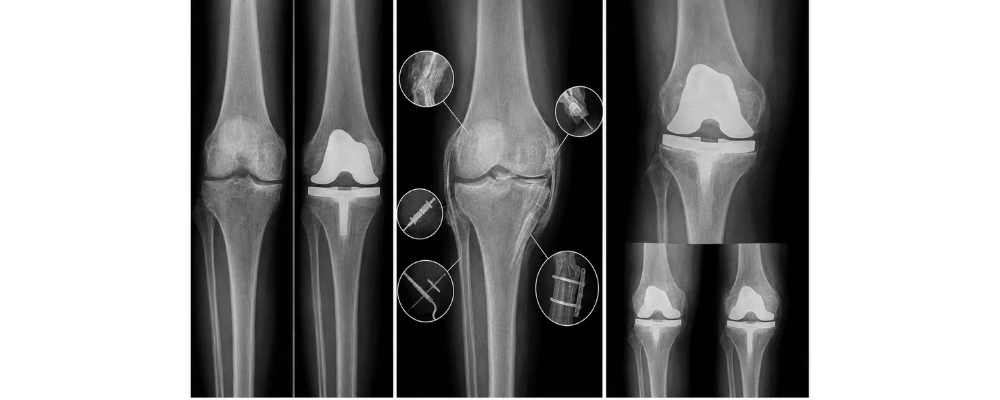
Knee Preservation vs Knee Replacement: What Does It Mean?
Knee preservation is about keeping your natural knee joint for as long as possible. It may involve non-surgical care, arthroscopy, cartilage treatment, ligament reconstruction, meniscus repair, or realignment surgery such as osteotomy. The aim is to reduce pain, improve function, correct mechanical problems, and slow down further joint damage. Knee replacement, on the other hand, is usually considered when the joint surface is badly damaged. In this procedure, the worn-out parts of the knee are replaced with artificial components. This may be a partial knee replacement if only one part of the knee is affected, or a total knee replacement if the arthritis is more advanced. In simple terms: Knee preservation tries to protect your own knee. Knee replacement changes the damaged joint surface to reduce pain and restore mobility.The Big Picture: Saving the Knee or Replacing the Worn Surface
If knee arthritis or cartilage damage is still in the early or moderate stage, preserving the knee may be possible. This is especially true when the damage is limited to one area, the ligaments are stable, and the patient is active. But when arthritis has progressed too far, the cartilage is severely worn, the knee is stiff, painful, deformed, or affecting daily life, knee replacement may become the more predictable option. The goal is not to choose the smallest treatment or the biggest treatment. The goal is to choose the most suitable treatment for your knee condition.Who Is Best Suited for Knee Preservation?
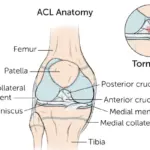
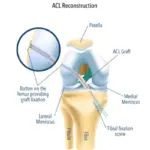
Knee preservation is usually considered for patients who are younger, active, or have limited knee damage. It may be suitable when the arthritis is not advanced in all parts of the knee. It may be a good option for patients with: 1.Early knee arthritis 2.Meniscus injury 3.Cartilage damage 4.ACL or ligament injury 5.Sports-related knee pain 6.Knee pain due to alignment problems 7.One-sided knee wear 8.Good knee movement 9.Stable ligaments 10.A strong desire to continue an active lifestyle For example, a patient with bow-leg alignment and arthritis mainly on the inner side of the knee may benefit from a realignment procedure. This can shift pressure away from the damaged area and help preserve the natural joint.When Knee Preservation May Not Be the Right Option
Knee preservation may not work well if the joint damage is too advanced. It may not be suitable for patients with: 1.Severe arthritis in multiple compartments 2.Very limited knee movement 3.Major stiffness 4.Severe deformity 5.Advanced cartilage loss 6.Inflammatory arthritis 7.Severe instability 8.Long-standing pain that affects basic daily activities In these cases, preserving the joint may not give enough pain relief. Repeated injections, medicines, or minor procedures may only provide temporary benefit if the knee is already badly damaged.Who Is Best Suited for Knee Replacement?
Knee replacement is generally recommended when arthritis is advanced and quality of life is significantly affected. It may be suitable for patients who have: 1.Severe knee pain while walking 2.Difficulty climbing stairs 3.Pain even during rest or sleep 4.Swelling and stiffness 5.Bow-leg or knock-knee deformity 6.Reduced walking distance 7.Failure of medicines, physiotherapy, and injections 8.Advanced arthritis on X-ray 9.Difficulty performing normal daily activities For the right patient, knee replacement can provide reliable pain relief, better walking ability, improved alignment, and greater independence in daily life.Partial Knee Replacement or Total Knee Replacement?
Not every patient needs a total knee replacement. If only one compartment of the knee is damaged, a partial knee replacement may be considered. This replaces only the affected part of the knee while preserving the healthy areas. If arthritis affects more than one compartment, or the knee has severe deformity, stiffness, or widespread cartilage loss, total knee replacement may be more appropriate. The decision depends on standing X-rays, physical examination, ligament condition, pain pattern, and patient expectations.What to Expect with Knee Preservation
The main goal of knee preservation is to reduce pain while keeping your natural knee joint. Depending on the treatment, recovery may vary. Non-surgical treatment may include exercises, weight control, activity modification, medicines, and injections. Surgical preservation procedures such as arthroscopy, ligament reconstruction, cartilage repair, or osteotomy require structured rehabilitation. The benefits of knee preservation include maintaining the natural joint, delaying replacement, and allowing active patients to continue work, sport, or exercise when medically suitable. The trade-off is that it may not stop arthritis forever. Some patients may still need knee replacement in the future if the joint continues to wear out.What to Expect with Knee Replacement
The main goal of knee replacement is pain relief and improved function in patients with advanced joint damage. Most patients begin walking with support soon after surgery. Physiotherapy is important for improving movement, strength, balance, and confidence. Recovery continues gradually over weeks and months. The benefits of knee replacement include predictable pain relief, improved walking ability, correction of deformity, and better quality of life. The trade-off is that it is a bigger surgery than most preservation procedures, and implants need long-term care and monitoring. Younger, highly active patients may have a higher chance of needing revision surgery later in life.Which Option Is Better?
There is no single answer. Knee preservation is better when the natural joint can still be protected. Knee replacement is better when the joint is too damaged to preserve successfully. A 35-year-old athlete with a ligament injury, a 45-year-old active patient with one-sided knee arthritis, and a 68-year-old patient with severe knee arthritis may all have knee pain. But their best treatment options may be completely different. That is why proper diagnosis is very important.How Does a Knee Specialist Decide?
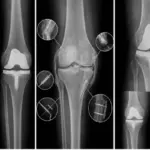
A knee specialist will assess several factors before recommending treatment. These include: 1.Your age 2.Activity level 3.Pain severity 4.Duration of symptoms 5.Knee alignment 6.Range of movement 7.Ligament stability 8.Cartilage condition 9.Meniscus condition 10.X-ray and MRI findings 11.Previous treatments 12.Work, lifestyle, and sports goals Standing X-rays are especially useful because they show how the knee behaves under body weight. In some cases, MRI may be needed to understand cartilage, ligament, or meniscus damage. The decision should always be personalized. The same X-ray finding may require different treatment in different patients depending on symptoms, lifestyle, and expectations.Take-Home Message
Knee preservation and knee replacement are both valuable treatment options, but they are not the same. Knee preservation is joint-saving. It is often suitable for younger or active patients with early or limited damage. Knee replacement is joint-resurfacing. It is usually suitable for patients with advanced arthritis, severe pain, deformity, and difficulty in daily life. If your knee can be safely preserved, that may help delay or avoid replacement. But if the joint is already severely damaged, knee replacement may offer better pain relief and function. The best option depends on your knee, not just your age or pain level. A detailed consultation, standing X-rays, and a clear discussion with an experienced knee specialist can help you choose the right path.Final Thought
If you are suffering from knee pain and are unsure whether you need knee preservation or knee replacement, do not make the decision based only on fear, online advice, or someone else’s experience. Every knee is different. A careful evaluation can help you understand whether your knee can be preserved, repaired, realigned, partially replaced, or fully replaced. The right treatment at the right time can help you move better, reduce pain, and return to a more active life.Frequently Asked Questions:
1. What is the difference between knee preservation and knee replacement?
Knee preservation focuses on protecting and improving your natural knee joint through treatments such as physiotherapy, injections, arthroscopy, cartilage repair, ligament reconstruction, or osteotomy. Knee replacement involves replacing damaged joint surfaces with artificial implants when arthritis is advanced.
2. Can knee preservation delay knee replacement?
Yes, in selected patients, knee preservation treatments can help reduce pain, improve function, and delay the need for knee replacement. This is more likely when arthritis is early or limited to one part of the knee.
3. Who is suitable for knee preservation?
Knee preservation may be suitable for younger or active patients with early arthritis, cartilage injury, meniscus tear, ligament injury, or knee alignment problems. A knee specialist will decide based on examination, X-rays, MRI findings, and activity goals.
4. When is knee replacement needed?
Knee replacement may be needed when arthritis is advanced, pain is severe, walking is difficult, stiffness is significant, and non-surgical treatments no longer provide enough relief.
5. Is knee replacement better than knee preservation?
Neither option is automatically better. Knee preservation is better for selected early-stage problems where the natural joint can be protected. Knee replacement is better for advanced arthritis where joint damage is severe and quality of life is affected.
6. Can I avoid knee replacement completely?
Some patients can delay or avoid knee replacement with early diagnosis, exercise, weight control, physiotherapy, injections, and suitable preservation procedures. However, if arthritis is advanced, replacement may become the most reliable treatment.
7. Is knee osteotomy a type of knee preservation?
Yes, knee osteotomy is a joint-preserving procedure. It realigns the leg to shift pressure away from the damaged part of the knee and may help active patients with arthritis mainly on one side of the knee.
8. Which doctor should I consult for knee preservation or knee replacement in Bangalore?
You should consult an experienced orthopedic knee specialist who understands both joint preservation and knee replacement options. Dr. Vijaykumar D offers advanced evaluation and personalized treatment for knee pain, sports injuries, arthritis, and joint replacement in Bangalore.
Trustindex verifies that the original source of the review is Google. Dr Vijay Kumar D is a great doctor. He takes time with patient to help them with their health issues and very humble to speak. I have observed the same during my every visit. It is rare to find Doctor that combine and thank you so much Vijay sirPosted onTrustindex verifies that the original source of the review is Google. क्या सर अभी एम्स में देखते हैं या सर को देखना है तो कैसे संपर्क किया जाए कृपया जल्दी बताए बहुत जरूरी है किसी को भी पता हो तो जरूर बताएPosted onTrustindex verifies that the original source of the review is Google. Good morning sir gPosted onTrustindex verifies that the original source of the review is Google. Dr. Vijay is an excellent doctor with a kind demeanor, a down-to-earth attitude, and a highly cooperative approach toward his patients.Posted onTrustindex verifies that the original source of the review is Google. Left ankle diagnostic arthroscopic loose chondral flap removal ,microfracher done by Dr. Vijay D , thank you so much,Posted onTrustindex verifies that the original source of the review is Google. My name is Chandan Sharma. I had ACL tear a year ago. Then AIIMS Orthopedic Surgeon Dr. Vijay Kumar Digge did my surgery. I am absolutely fine. I thank the Dr. and his surgeon team.Posted onTrustindex verifies that the original source of the review is Google. मैं जिला भिवानी हरियाणा से संगीता रहेजा हूं। मेरे दाएं पैर के टखने में कई सालों से दर्द और सूजन थी।कई बार तो चलना भी मुश्किल हो जाता। मैंने एम्स दिल्ली में दिखाया। वहां डॉक्टर विजय डी जी ने 27 नवंबर, 2024 को मेरे दाएं पैर के टखने का आपरेशन किया। यह आपरेशन बहुत सफल रहा।अब मैं वाकर और वाकरबूट के साथ चल सकती हूं और मुझे दर्द से राहत मिली। मैं डॉक्टर विजय डी जी का धन्यवाद करती हूं। मैं राम जी से प्रार्थना करती हूं कि वे इन्हें दीर्घायु करें ताकि ये ऐसे ही समाज सेवा करते रहें।Posted onTrustindex verifies that the original source of the review is Google. Dr. Vijay Kumar D is a very professional doctor. He has done excellent job. He has operated my mother's ankle surgery. We have an amazing experience. Patient Name - Mrs. Meenakshi Gulati.