Foot injuries can happen in a split second—whether from sports, sudden falls, road accidents, gym workouts, or even a wrong step while walking on uneven surfaces. Because the foot carries the entire body weight, even a mild injury can disrupt daily life, mobility, and independence. For residents of one of Bengaluru’s busiest lifestyle hubs, knowing how to identify and manage foot injuries effectively is essential for faster healing and better long-term outcomes.
This blog offers a clear, medically sound, and easy-to-understand explanation of fractures, sprains, and overall foot injury care, with a special focus on treatment access and recovery strategies in Indiranagar. If you’re looking for expert Foot injury management in Indiranagar, guidance for Foot injury management near Indiranagar, or care from the Best Orthopaedic Clinic in Indiranagar, this article will help you understand every stage—from injury recognition to rehabilitation. Insights from Best Orthopedic Surgeon in Indiranagar expert, Dr. Vijaykumar D and his senior colleague Doctor, help shape best practices for effective recovery.
Understanding the Foot: A Complex Structure That Needs Special Care
The human foot is made of:
- 26 bones
- 33 joints
- More than 100 ligaments, muscles, and tendons
- A dense network of nerves and blood vessels
This intricate design provides balance, shock absorption, movement, and flexibility. But it also means that when injury strikes, the foot requires precise diagnosis and structured care. Mismanagement can lead to chronic pain, deformities, nerve damage, improper healing, or recurring instability.
Major Types of Foot Injuries
1. Foot Fractures
A fracture is a break or crack in the bone. Foot fractures range from tiny hairline cracks to severe bone breaks.
Common causes:
- Falls from height
- Heavy object impact
- Twisting injuries
- Sports accidents
- Road crashes
- High-intensity training
- Osteoporosis-related fragility
Most commonly fractured foot bones:
- Metatarsals (middle foot bones)
- Phalanges (toe bones)
- Calcaneus (heel bone)
- Navicular and cuboid bones
- Talus (ankle-foot connecting bone)
Symptoms:
- Sudden sharp pain
- Swelling and redness
- Bruising or discoloration
- Difficulty walking or bearing weight
- Visible deformity in severe cases
- Tenderness when touched
- Pain that worsens with movement
Types of foot fractures:
| Fracture Type | Description |
| Stress Fracture | Tiny cracks from repetitive strain |
| Displaced Fracture | Bone shifts out of position |
| Non-displaced Fracture | Bone cracks but stays aligned |
| Open Fracture | Bone breaks through the skin (emergency) |
| Comminuted Fracture | Bone breaks into multiple pieces |
Immediate medical care is vital, especially for displaced or open fractures, which need urgent stabilization, imaging, and often surgery.
2. Foot Sprains
A sprain is the stretching or tearing of ligaments—the tissue that connects bones to each other.
Common causes:
- Sudden twisting
- Landing awkwardly
- Running on uneven ground
- Skipping steps
- Sports like basketball, football, badminton, or running
Symptoms:
- Pain around the joint
- Difficulty moving the foot
- Swelling
- Warmth in the area
- Feeling of instability
- Pain increases when trying to stand or walk
Severity grading:
| Grade | Ligament Damage | Mobility |
| Grade 1 | Mild stretch | Slight pain, can walk |
| Grade 2 | Partial tear | Moderate pain, limping |
| Grade 3 | Complete tear | Severe pain, unstable foot |
Most sprains heal without surgery, but Grade 3 injuries require specialist evaluation and bracing or surgical repair in select cases.
3. Soft Tissue & Other Foot Injuries
These include:
- Plantar fasciitis
- Tendon injuries (Achilles, peroneal, tibialis posterior)
- Foot ligament tears
- Heel injuries
- Toe dislocations
- Ankle-foot combined trauma
- Diabetic foot complications
- Foot infections
- Nerve injuries
- Crush injuries
First-Aid for Foot Injuries: The GOLDEN Rule is R.I.C.E
For fractures and sprains, immediate response should follow the R.I.C.E protocol:
- R – Rest: Avoid standing or walking
- I – Ice: Apply ice pack 10–15 minutes every 2 hours
- C – Compression: Use an elastic bandage (not too tight)
- E – Elevation: Keep foot raised above heart level
Do NOT:
- Massage the injury immediately
- Apply heat in the first 48 hours
- Try to force movement
- Walk without support
- Self-diagnose fractures
When to Seek Medical Help Immediately
You must see a doctor urgently if:
- You cannot bear weight at all
- Pain is unbearable and persistent
- There is visible deformity
- The foot looks misaligned
- There is numbness or tingling
- A wound is present with suspected bone injury
- Swelling worsens rapidly
- You hear a “crack” or “pop” sound during injury
- Pain does not improve after 48 hours of first-aid
Importance of Accurate Diagnosis
At the Best Orthopaedic Clinic in Indiranagar, specialists rely on:
- X-Ray (for fractures)
- MRI (for ligament, tendon, cartilage injury)
- CT scan (for complex fractures)
- Ultrasound (soft tissue swelling, tendon tears)
- Gait analysis (for biomechanical imbalance)
Without imaging, a fracture can be mistaken for a sprain, delaying treatment and causing improper healing.
Professional Treatment Options
Fracture Management
Depending on severity:
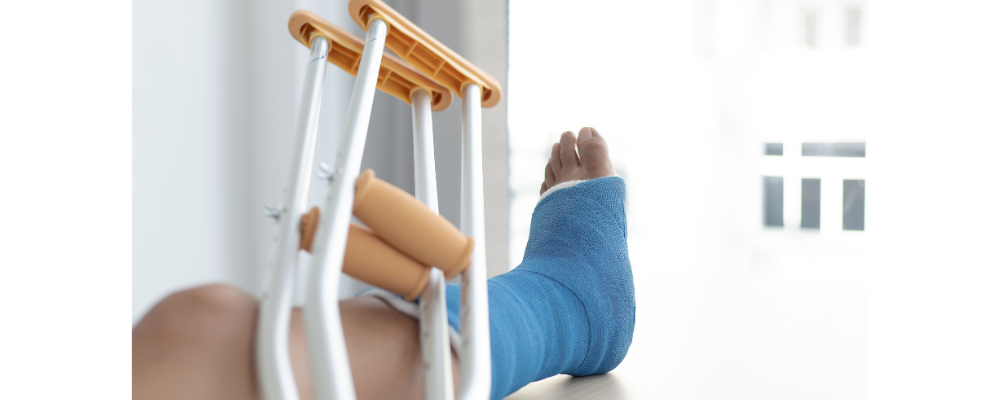
- Cast or splint
- Walking boot support
- Pain and inflammation control
- Bone alignment correction
- Surgery (for displaced or complex fractures)
- Post-surgical fixation plates or screws when needed
Sprain & Ligament Injury Care
- Elastic bracing
- Walking support boot
- Pain management medicines
- Physiotherapy
- Ligament strengthening
- PRP therapy for selected ligament and tendon injuries
- Surgery only if required
Soft Tissue Injury Care
- Physiotherapy
- Shockwave therapy for heel pain
- Insoles and footwear correction
- PRP or injection therapies where necessary
- Posture and walking habit correction
Advanced Recovery Therapies Commonly Used
| Therapy | Benefit |
| Physiotherapy | Restores strength, mobility, balance |
| PRP (Platelet Rich Plasma) | Speeds ligament & tendon healing |
| Bracing & Taping | Prevents instability |
| Orthotic Insoles | Corrects walking imbalance |
| Shockwave Therapy | Helps heel and fascia pain |
| Calcium & Vitamin D Support | Improves bone healing |
| Gait Training | Reduces re-injury risk |
| Hydrotherapy | Gentle muscle strengthening |
How Foot Injury Management Works Best for Indiranagar Residents
People living in Indiranagar are highly active—morning runners, sports players, gym lovers, long walkers, office commuters, weekend trekkers, and lifestyle enthusiasts. This makes Foot injury management near Indiranagar services crucial for quick access to care.
Whether you need Foot injury management in Indiranagar, care from the Best Orthopedic Surgeon in Indiranagar, or treatment at the Best Orthopaedic Clinic in Indiranagar, expert supervision ensures:
- Correct diagnosis
- Minimal downtime
- Faster recovery
- Lower chance of chronic pain
- Better functional outcomes
- Prevention of repeat injuries
All 4 key search phrases are important because people frequently look for nearby, high-quality orthopaedic care when foot injuries strike suddenly.
Expert Guidance by Dr. Vijaykumar D.
Dr. Vijaykumar emphasizes:
- Early diagnosis over assumptions
- Joint stabilization before movement
- Structured rehab over quick return to activity
- Footwear correction to prevent reinjury
- Physiotherapy as a core part of healing
- Lifestyle adjustments for better outcomes
- Personalized care plans instead of generic treatment
His approach aligns with best orthopaedic practices used at top clinics in the region.
Rehabilitation: The Most Ignored but Most Important Stage
Rehabilitation must begin once swelling reduces and the doctor clears movement.
Goals:
- Restore range of motion
- Strengthen ligaments and muscles
- Improve foot balance and posture
- Regain walking confidence
- Reduce stiffness after casting
- Train the foot for pressure distribution
- Avoid limping habits
- Prevent chronic instability
Typical rehab duration:
- Sprains: 2–6 weeks depending on grade
- Stress fractures: 4–8 weeks
- Regular fractures: 6–12 weeks
- Post-surgery: 12+ weeks including strengthening
Skipping rehab can result in:
- Flat foot progression
- Chronic ankle instability
- Heel and arch pain
- Knee and hip compensation pain
- Altered walking pattern
- Repeat ligament sprains
- Reduced sports performance
- Persistent swelling
Prevention Tips for the Future
Choose supportive footwear
Avoid long-term use of:
- Flip-flops
- Completely flat shoes
- High heels without cushioning
- Tight toe-squeezing footwear
Warm-up before activity
Stretch foot and ankle joints before running or sports.
Avoid repetitive strain
Take rest days between intense training.
Maintain bone strength
Include calcium-rich foods and vitamin D exposure.
Improve walking habits
Avoid dragging feet or running on uneven surfaces.
If diabetic, check feet daily
Small injuries can progress into ulcers.
Foot injuries may seem common, but their treatment requires precision, early diagnosis, stabilization, and structured rehabilitation. For people seeking Foot injury management in Indiranagar, nearby support for Foot injury management near Indiranagar, or expert care from the Best Orthopedic Surgeon in Indiranagar, specialist treatment makes all the difference.
Choosing a trusted Best Orthopaedic Clinic in Indiranagar ensures the safest and fastest path to recovery—with long-term mobility preserved and reinjury risk minimized.
FAQ’s:
1. Can I walk after a foot sprain?
Yes, if pain is mild (Grade 1), but with support like bracing. Avoid walking in Grade 2–3 without medical advice.
2. How do I know if it’s a sprain or fracture?
If you cannot bear weight, or pain is pinpoint sharp and swelling is severe, a fracture is likely. Only imaging can confirm.
3. Is massage good for foot sprains?
Not immediately. Massage should only start after 48–72 hours and once swelling reduces.
4. Do stress fractures need a cast?
Not always. A walking boot is often enough unless pain is severe.
5. How long should I ice the injury?
10–15 minutes every 2 hours for the first 48 hours.
6. Are painkillers enough for foot sprains?
Painkillers reduce symptoms but do not stabilize ligaments. Proper bracing and therapy are key.
7. Can wrong footwear cause repeat foot injuries?
Yes. Footwear plays a major role in joint stability and injury recurrence.
8. Is physiotherapy necessary after cast removal?
Absolutely. Casting weakens foot muscles and stiffens joints—therapy restores function.