If you’ve twisted your knee during a football match in Indiranagar, landed awkwardly during a cricket sprint in Whitefield, or felt your knee “give way” mid-squat at the gym in HSR Layout — you may be dealing with an ACL tear. It’s one of the most common and most feared sports injuries among athletes and active individuals in Bangalore.
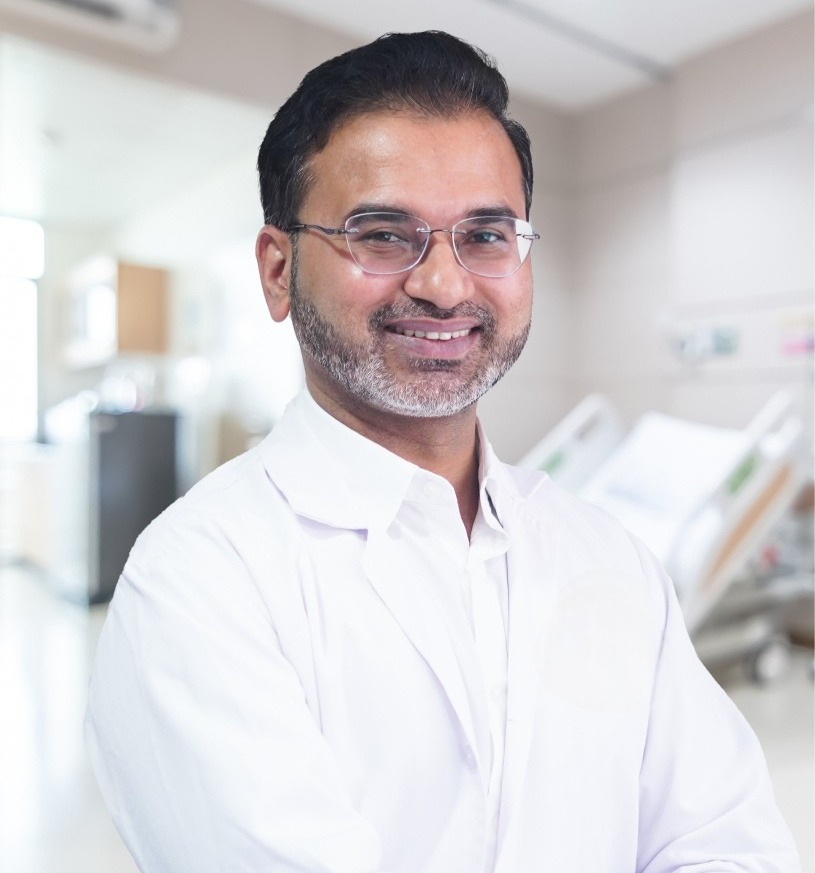
The good news? With the right treatment and a structured recovery plan, most athletes return to full sports activity within 6 to 9 months. Dr. Vijaykumar D, an experienced ACL Reconstruction Surgeon Bangalore patients rely on, has helped hundreds of athletes — from weekend cricket warriors to competitive footballers — get back on the field faster and stronger.
This complete guide covers everything you need to know about ACL injury, surgery, rehabilitation, and the ACL tear recovery timeline — so you can make informed decisions about your knee health.
What Is an ACL Tear?
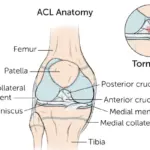
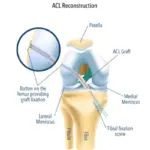
The Anterior Cruciate Ligament (ACL) is a thick band of tissue running diagonally through the middle of your knee joint. It connects your thighbone (femur) to your shinbone (tibia) and plays a critical role in controlling rotational movement and forward motion of the knee.
An ACL ligament tear happens when this ligament is overstretched or completely ruptured, usually during sudden deceleration, pivoting, or direct impact to the knee. It’s classified into three grades:
- Grade 1: Minor sprain — fibres stretched but intact
- Grade 2: Partial tear — ligament partially torn
- Grade 3: Complete tear — ligament fully ruptured, knee becomes unstable
Grade 3 tears almost always require ACL reconstruction surgery for athletes who want to return to sports.
Common Causes of ACL Injuries
Football Injuries
Football is one of the top causes of ACL injuries in Bangalore. Sudden direction changes, tackles, and jumping movements put intense strain on the knee ligament. Football knee injury treatment often requires surgery followed by sport-specific rehabilitation.
Cricket Injuries
Explosive bowling actions, sharp fielding dives, and quick running between wickets frequently cause ACL tears in cricketers. As a cricket injury specialist, Dr. Vijaykumar D understands the unique biomechanical demands of the sport.
Gym-Related Injuries
Heavy squatting with poor form, box jumps with bad landing mechanics, and loaded lunges can all tear the ACL. Knee instability treatment is increasingly common among gym-goers across Bellandur, Marathahalli, and Sarjapur Road.
Running and Jumping Injuries
Long-distance runners and basketball or volleyball players commonly injure their ACL during awkward landings or sudden stops.
Sudden Twisting Injuries
Even non-athletes can suffer ACL tears from stepping off a curb at an odd angle or slipping on a wet floor — a knee pain after sports injury complaint that’s more common than most people realize.
Symptoms of an ACL Tear
What are the symptoms of an ACL tear?
The classic signs of an ACL tear include:
- A loud “pop” sound at the time of injury
- Immediate severe knee pain
- Rapid swelling within the first few hours
- Feeling of the knee “giving out” or buckling
- Inability to bear full weight on the leg
- Limited range of motion
If you experience these symptoms after a sports injury, seek medical attention promptly. Ignoring knee instability can lead to further damage to the meniscus and cartilage.
When Knee Pain Needs Medical Attention
Not all knee pain is an ACL tear, but certain signs warrant an urgent visit to an orthopedic sports surgeon:
- Sudden swelling after an injury
- Feeling of looseness or instability in the joint
- Knee locking or inability to fully straighten the leg
- Pain that worsens with activity
- Any “giving way” sensation during walking
If you’re in Bangalore — whether in Indiranagar, Whitefield, or Sarjapur Road — don’t delay. Early diagnosis leads to better outcomes.
Diagnosis of ACL Injuries
Dr. Vijaykumar D performs a thorough clinical examination that typically includes:
- Physical tests — Lachman test, Anterior Drawer test, and Pivot Shift test to assess ligament stability
- MRI scan — Gold standard for confirming the extent of the ACL ligament tear and associated injuries
- X-ray — To rule out bony fractures around the knee
An accurate diagnosis is the first step toward the right ACL Reconstruction treatment in Infantry Road Bangalore.
Non-Surgical ACL Treatment Options
Not every ACL injury requires surgery. For older, less active patients or those with isolated Grade 1–2 tears, conservative management may be appropriate:
- RICE protocol — Rest, Ice, Compression, Elevation
- ACL physiotherapy — Strengthening the muscles around the knee to compensate for ligament laxity
- Bracing — Knee braces to provide external stability
- Activity modification — Avoiding pivoting or high-impact activities
However, non-surgical treatment rarely allows athletes to return to competitive sports with full confidence and stability.
When Is ACL Reconstruction Surgery Needed?
When is ACL reconstruction surgery necessary?
Surgery is strongly recommended when:
- You are an athlete or physically active individual
- The knee is persistently unstable despite physiotherapy
- You have a complete (Grade 3) ACL tear
- The ACL injury is accompanied by meniscus or cartilage damage
- You are under 40 and wish to return to high-demand activities
For athletes in Bangalore who want to return to football, cricket, or gym training, ACL reconstruction surgery is usually the best path forward.
What Is Arthroscopic ACL Surgery?
Is arthroscopic ACL surgery better than open surgery?
Yes — arthroscopic ACL surgery is the current gold standard. It is a minimally invasive ACL surgery performed through small keyhole incisions using a tiny camera (arthroscope) and surgical instruments.
During arthroscopic ACL surgery, Dr. Vijaykumar D:
- Makes 2–3 small incisions around the knee
- Inserts an arthroscope to visualise the joint
- Removes the torn ACL
- Harvests a tendon graft (usually from the hamstring or patellar tendon)
- Drills tunnels in the bone and fixes the graft in anatomical position
- Confirms stability and closes incisions
The entire procedure typically takes 60–90 minutes under regional or general anaesthesia.
Benefits of Minimally Invasive ACL Surgery
| Benefit | Details |
| Smaller incisions | 2–3 cm vs. 10–15 cm in open surgery |
| Less blood loss | Minimal intraoperative bleeding |
| Reduced infection risk | Less tissue exposure |
| Faster recovery | Return to sports 6–9 months post-op |
| Less post-op pain | Smaller wounds mean less nerve disruption |
| Shorter hospital stay | Usually 1 day |
Patients from Bellandur, Marathahalli, and across Bangalore consistently choose minimally invasive ACL surgery for its superior outcomes and quicker return to sports.
ACL Reconstruction Procedure Explained
Ligament reconstruction surgery involves replacing the damaged ACL with a graft — a piece of tendon harvested either from the patient (autograft) or a donor (allograft).
Common graft choices:
- Hamstring tendon autograft — Most commonly used; less donor-site pain
- Patellar tendon autograft — Strong and time-tested; slightly more donor-site discomfort
- Quadriceps tendon autograft — Growing in popularity for revision surgeries
- Allograft — Donor tendon; less common in young athletes
Dr. Vijaykumar D at ACL surgery Infantry Road selects the most appropriate graft based on the patient’s age, activity level, and anatomy.
Comparison Table 1: ACL Treatment Options
| Treatment Type | Procedure Duration | Hospital Stay | Recovery Timeline | Success Rate |
| Conservative (Physiotherapy) | Ongoing | None | 3–6 months | 50–60% return to sport |
| Arthroscopic ACL Reconstruction | 60–90 minutes | 1 day | 6–9 months | 85–90% return to sport |
| Open ACL Surgery (Traditional) | 2–3 hours | 2–4 days | 9–12 months | 75–80% return to sport |
| Revision ACL Reconstruction | 90–120 minutes | 1–2 days | 9–12 months | 75–85% return to sport |
Comparison Table 2: Arthroscopic vs. Traditional Open ACL Surgery
| Parameter | Arthroscopic ACL Surgery | Traditional Open ACL Surgery |
| Incision Size | 2–3 cm (keyhole) | 10–15 cm (large open cut) |
| Blood Loss | Minimal | Moderate to significant |
| Post-op Pain Level | Mild to moderate | Moderate to severe |
| Recovery Speed | Faster (6–9 months) | Slower (9–12 months) |
| Rehabilitation Duration | 5–6 months | 8–10 months |
| Risk of Infection | Lower | Higher |
| Hospital Stay | 1 day | 2–4 days |
| Scar Size | Very small | Prominent scar |
CL Tear Recovery Timeline: Month-by-Month Guide
How long does ACL recovery take?
Recovery after ACL reconstruction typically spans 6–9 months. Here’s what to expect:
Month 1: Protection & Early Healing
- Use crutches and a hinged knee brace
- Control swelling with ice and elevation
- Begin gentle range-of-motion exercises
- Activate quad muscles with straight leg raises
Month 2: Rebuilding Range of Motion
- Wean off crutches with physiotherapist guidance
- Achieve at least 120° knee flexion
- Begin stationary cycling (low resistance)
- Focus on quad and hamstring strengthening
Month 3: Strength Building
- Progress to closed-chain exercises (mini squats, leg press)
- Begin pool walking or hydrotherapy
- Improve balance with single-leg standing exercises
- Gradually increase walking distance and speed
Month 4: Functional Training
- Start light jogging on a treadmill or flat surface
- Introduce agility ladder drills
- Continue sport-specific strength and conditioning
- Monitor for any swelling or discomfort
Month 5: Sport-Specific Conditioning
- Progress to cutting, pivoting, and direction-change drills
- Introduce controlled kicking (football) or bowling action (cricket)
- Begin plyometric training — box jumps, lateral hops
- Full gym workouts resume with caution
Month 6: Return-to-Sport Testing
- Functional movement assessments by your physiotherapist
- Strength symmetry testing (operated vs non-operated leg — aim for ≥90%)
- Psychological readiness evaluation
- Clearance for return to full training and competition
Physiotherapy and Rehabilitation After ACL Surgery
Rehabilitation after ACL surgery is just as important as the surgery itself. A structured ACL physiotherapy program accelerates healing, prevents muscle atrophy, and restores full knee function.
At Dr. Vijaykumar D’s clinic on Infantry Road, every patient receives a personalised sports injury rehabilitation plan that includes:
- Pre-operative physiotherapy (prehab) to strengthen the knee before surgery
- Phase-wise post-operative rehab protocol
- Manual therapy and joint mobilisation
- Neuromuscular re-education
- Sport-specific functional training
Patients from HSR Layout, Sarjapur Road, and across Bangalore can access in-clinic or home-based rehabilitation guidance.
Best ACL Rehab Exercises for Athletes
These evidence-based ACL rehab exercises form the foundation of recovery:
Phase 1 (Weeks 1–4):
- Straight leg raises (3 sets × 15 reps)
- Quad sets and heel slides
- Ankle pumps for circulation
Phase 2 (Weeks 4–8):
- Stationary bike (20–30 minutes daily)
- Standing calf raises
- Terminal knee extensions with resistance band
Phase 3 (Weeks 8–16):
- Leg press (double leg, progressing to single leg)
- Mini squats (0–60° flexion)
- Step-ups and step-downs
Phase 4 (Months 4–6):
- Romanian deadlifts
- Single-leg squats
- Lateral band walks
- Plyometric progressions
Always perform ACL rehab exercises under the supervision of a qualified physiotherapist, especially in the early phases.
Recovery Tips for Football and Cricket Players
For footballers:
- Avoid pivoting and cutting movements until Month 5
- Return to shooting drills before contact training
- Wear a functional ACL brace during initial return-to-play phase
- Strengthen hip abductors to reduce knee stress during direction changes
For cricketers:
- Bowlers: Hold high-intensity deliveries until neuromuscular control is fully restored (typically Month 5–6)
- Batters: Focus on running between wickets drills from Month 4
- Fielders: Agility and dive-recovery training begins at Month 5
General tips for all athletes:
- Never rush the ACL tear recovery timeline — re-injury risk is highest in the first year
- Prioritise sleep and nutrition (adequate protein for tissue healing)
- Attend every physiotherapy session — skipping slows recovery
Risks of Delaying ACL Treatment
Waiting too long to treat an ACL tear is a common mistake with serious consequences:
- Meniscus damage: An unstable knee can tear the cartilage cushion inside the joint
- Cartilage wear: Early-onset arthritis accelerates significantly
- Muscle wasting: The quadriceps and hamstrings weaken rapidly with disuse
- Chronic instability: Repeated giving-way episodes damage other knee structures
- Prolonged recovery: Delayed surgery often means longer and harder post ACL surgery recovery
If you’ve had a sports knee injury with persistent instability, don’t wait. Book a consultation at ACL surgery Infantry Road as soon as possible.
How to Prevent Sports-Related ACL Injuries
ACL recovery for athletes includes education on prevention to reduce re-injury risk:
- Warm up properly before every training session
- Strengthen the hamstrings and glutes — weak posterior chain muscles increase ACL stress
- Improve landing mechanics — learn to land with slightly bent knees
- Use neuromuscular training — programs like FIFA 11+ significantly reduce ACL injury rates
- Wear appropriate footwear — sport-specific shoes with adequate grip
- Avoid training on fatigued legs — most ACL injuries happen late in games when muscles are tired
Why Choose Dr. Vijaykumar D in Infantry Road, Bangalore
When it comes to advanced sports injury care, experience and specialisation matter enormously. Here’s why athletes across Bangalore — from Indiranagar to Whitefield to Marathahalli — choose Dr. Vijaykumar D:
- Specialist expertise: Dedicated Orthopedic & Sports Injury Specialist with deep experience in ACL reconstruction and ligament reconstruction surgery
- Advanced arthroscopic techniques: Uses the latest arthroscopic equipment for precision and minimal tissue disruption
- Patient-centred rehabilitation: Every patient receives a customised sports injury rehabilitation protocol, not a one-size-fits-all plan
- High success rates: Consistent, excellent outcomes for athletes returning to their sport
- Convenient location: Clinic located on Infantry Road, Bangalore — easily accessible from Indiranagar, Shivajinagar, and central Bangalore
- Transparent communication: Dr. Vijaykumar D explains every step of the ACL Reconstruction treatment in Infantry Road Bangalore so patients are never left guessing
As a trusted ACL Reconstruction Surgeon Infantry Road, Dr. Vijaykumar D combines clinical expertise with genuine care for each patient’s athletic and personal goals.
Conclusion
An ACL tear is a serious injury — but it’s not the end of your sporting life. With accurate diagnosis, timely surgery, and a disciplined rehabilitation program, the vast majority of athletes make a full recovery and return to the sport they love.
Whether you’re a footballer in Indiranagar, a cricketer in Whitefield, or a gym-goer in Bellandur, the ACL tear recovery timeline doesn’t have to feel overwhelming. Dr. Vijaykumar D, a highly experienced ACL Reconstruction Surgeon Bangalore patients trust, is here to guide you through every phase — from diagnosis to the day you step back on the field.
Don’t let knee pain hold you back. Seek expert care early, follow your rehabilitation plan consistently, and take the first step toward a complete recovery today.
Frequently Asked Questions:
How long does ACL recovery take after surgery?
The typical ACL tear recovery timeline is 6 to 9 months after arthroscopic ACL reconstruction. The exact duration depends on your age, fitness level, graft choice, and adherence to ACL physiotherapy. Most athletes return to competitive sports by Month 6–9.
Is ACL reconstruction surgery available in Infantry Road, Bangalore?
Yes. Dr. Vijaykumar D performs ACL surgery in Infantry Road, offering advanced arthroscopic ACL reconstruction for athletes and active individuals. He is a leading ACL Reconstruction Surgeon in Infantry Road with extensive experience in sports knee surgeries.
What are the best ACL rehab exercises after surgery?
The best ACL rehab exercises include straight leg raises, quad sets, stationary cycling, leg press, step-ups, single-leg squats, and plyometric progressions. These should be performed under the guidance of a physiotherapist as part of a structured rehabilitation after ACL surgery program.
Can I return to cricket or football after ACL reconstruction?
Yes. Return to sports after ACL surgery is achievable for most athletes with proper surgery and rehabilitation. Cricketers and footballers typically return to training by Month 5–6 and competitive play by Month 6–9, provided their post ACL surgery recovery milestones are met.
What is the difference between arthroscopic ACL surgery and open surgery?
Arthroscopic ACL surgery is a minimally invasive ACL surgery performed through small keyhole incisions. Compared to traditional open surgery, it involves smaller incisions, less blood loss, lower infection risk, faster recovery, and shorter rehabilitation duration. It is now the gold standard for ACL reconstruction treatment in Infantry Road Bangalore and worldwide.
When should I see a doctor for knee pain after a sports injury?
You should see an orthopedic sports surgeon immediately if you experience a “pop” at the time of injury, sudden swelling, knee instability or giving way, or inability to bear weight. Early diagnosis of knee ligament injury leads to significantly better treatment outcomes.
Ready to Recover? Book Your ACL Consultation Today
If you’re struggling with knee instability, persistent knee pain after sports injury, or have been diagnosed with a ligament tear, there’s no better time to act than now. Every week of delay increases the risk of further damage to your knee.
Dr. Vijaykumar D is Bangalore’s trusted ACL Reconstruction Surgeon Bangalore and ACL Reconstruction Surgeon Infantry Road, offering world-class ACL Reconstruction treatment in Infantry Road Bangalore. From your first consultation and diagnosis to ACL surgery Infantry Road and your personalised ACL rehab exercises plan — we’re with you every step of the way.
Whether you’re searching for a sports injury rehabilitation doctor near me Bangalore, need guidance on the ACL tear recovery timeline, or are ready to schedule your surgery, our team is here to help.
📍 Dr. Vijay Ortho Clinic Infantry Road, Bangalore
📞 Call us today to book your consultation
🗓️ Book an appointment online — early treatment means faster recovery and a stronger return to your sport.
Don’t wait for your knee to heal on its own. Take control of your recovery with the most experienced ACL Reconstruction Surgeon in Bangalore.